

 ₹https://store.kurlon.com/mattress-shop/hyderabad/tellapur/kurlon-company-owned-mattress-store-in-tellapur-hyderabad--6ic7sS/articles/benefits-of-the-zero-gravity-sleep-position-and-ho--c8ffb15b-476f-42c4-b70c-a228e1608e3d
Kurlon Company Owned Mattress Store, Tellapur, hyderabad
House No 27-6/407/PART/2/A/1, Survey No 407, KYR Complex, Ramachandrapuram, Nearby K-Grill Kitchen Restaurant, Tellapur, hyderabad, telangana - 502032
Kurlon Company Owned Mattress Store Social Feeds in Tellapur, hyderabad
Benefits of the Zero Gravity Sleep Position and How to Get It Right
If you wake up with a stiff back or sore neck, your sleeping position may be one of the factors worth considering. The way you position your head and legs can influence how your body feels while resting.
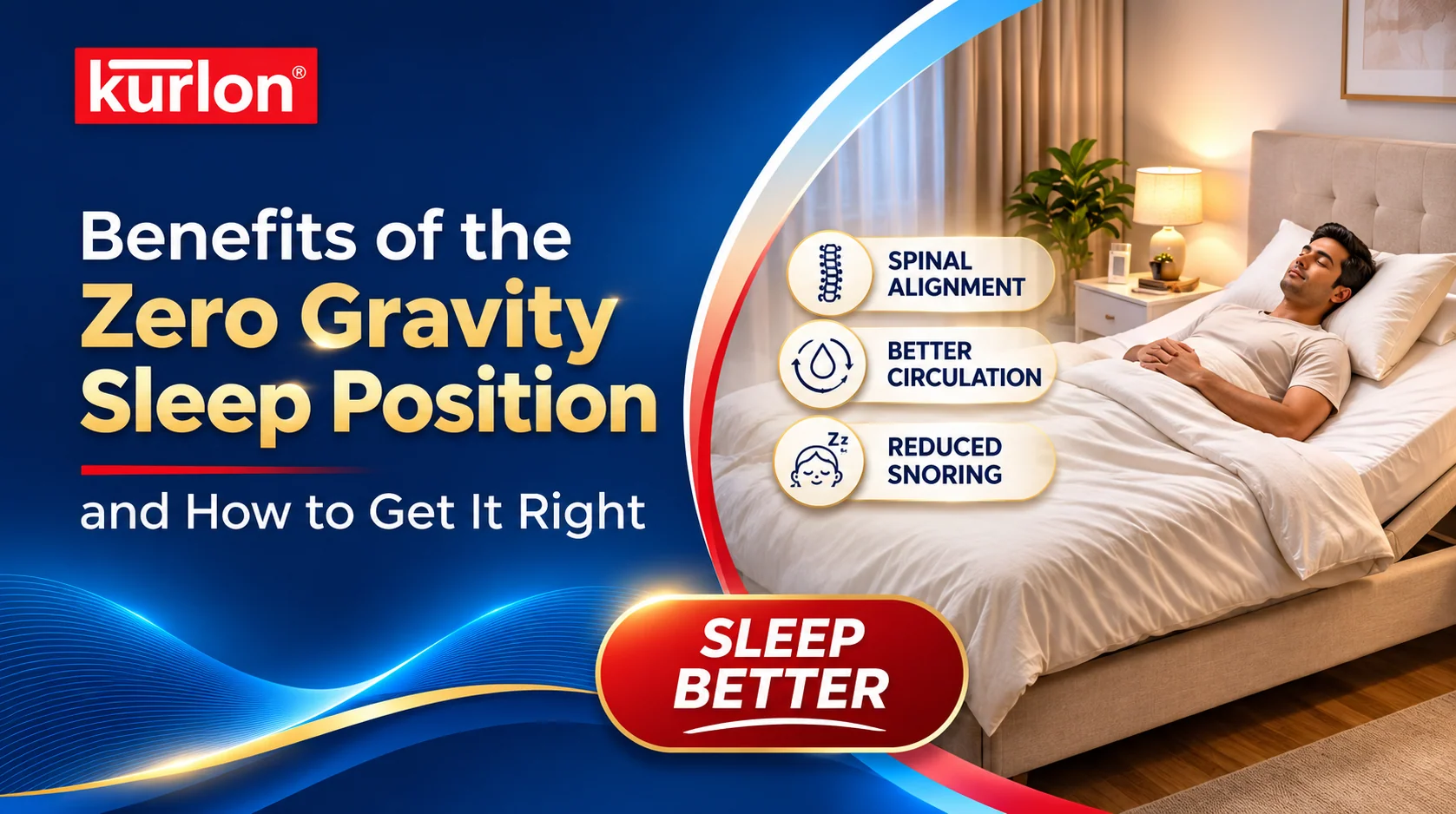
The zero gravity sleep position is a reclined sleeping posture in which your upper body and legs are slightly elevated. It is designed to distribute body weight more evenly and create a relaxed resting position.
Although the name sounds technical, you can understand the basic concept without specialised equipment. An adjustable bed can help you achieve this position while pillows and supportive cushions can help create a similar posture at home.
Let's explore what the zero gravity sleeping position means and its potential benefits as well as how to set it up comfortably.
What Is the Zero Gravity Sleep Position?
The zero gravity position is a reclined posture in which your head and upper body are elevated while your knees and legs are slightly raised.
The body rests in a relaxed position with the knees bent and the upper body supported. This creates a posture that some people find more comfortable than lying completely flat.
The concept is associated with a neutral body position used in discussions of astronaut seating and space travel. However sleeping in this position does not actually remove gravity or make the body weightless.
The main idea is to find a comfortable arrangement that supports your body without creating unnecessary pressure on particular areas.
What Are the Potential Benefits of the Zero Gravity Sleep Position?
The zero gravity sleep position may offer certain comfort benefits depending on your body and sleeping preferences. However its effects can vary from person to person and it should not be considered a treatment for medical conditions.
1. May Help Reduce Perceived Back Pressure
Elevating your legs and supporting your upper body can change how your weight is distributed while resting.
Some people find this position comfortable because it reduces the feeling of pressure around the lower back.
The level of comfort depends on your body position and mattress support as well as the amount of elevation.
2. May Make Breathing More Comfortable
Raising your upper body slightly can make resting more comfortable for some people who experience breathing discomfort when lying completely flat.
However persistent breathing difficulties should be evaluated by a healthcare professional.
3. May Help Some People With Snoring
For certain individuals sleeping with the upper body slightly elevated may help reduce positional snoring.
However snoring can have several causes. Persistent loud snoring or pauses in breathing during sleep should not be managed through sleeping position alone.
4. May Help With Nighttime Reflux Discomfort
Some people experience acid reflux when lying flat after eating.
Elevating the upper body may help reduce nighttime reflux symptoms for certain individuals. A properly designed incline is generally more suitable than simply raising the head with multiple pillows.
If you regularly experience acid reflux consider discussing suitable sleeping arrangements with your healthcare professional.
5. Provides a Comfortable Resting Position for the Legs
Slightly elevating the legs can feel comfortable for people who prefer additional support beneath their knees and calves.
The amount of elevation should feel natural rather than creating tension around the hips or lower back.
Who Should Try the Zero Gravity Sleep Position and Who May Not Need It?
The zero gravity position is not necessary for everyone. Your usual sleeping position and comfort preferences should guide your decision.
It May Be Worth Exploring If:
You prefer resting with your upper body slightly elevated.
You experience discomfort when lying completely flat.
You find additional support beneath your knees more comfortable.
You experience occasional positional snoring.
You want to experiment with different resting positions.
It May Not Suit Your Preferences If:
You already sleep comfortably in your usual position.
You frequently change positions throughout the night.
You prefer sleeping on your stomach.
You feel uncomfortable when your knees or upper body are elevated.
The position creates additional pressure around your neck or lower back.
If you have an existing medical condition or experience persistent pain or breathing difficulties consult a healthcare professional before making significant changes to your sleeping position.
How Do You Get the Zero Gravity Sleep Position Right?
You do not necessarily need an expensive adjustable bed to experiment with the zero gravity sleeping position. The important thing is to support your upper body and legs comfortably while avoiding unnecessary pressure on your neck and lower back.
You can try this position in two ways.
1. Using an Adjustable Bed Base
An adjustable bed makes it easier to change the elevation of your head and legs independently.
Follow these steps:
Lie flat on your back and allow your body to relax.
Raise the head section gradually until your upper body feels comfortably elevated.
Adjust the leg section so your knees are slightly bent and supported.
Make small adjustments until your lower back feels comfortable.
Save your preferred setting if your adjustable bed has a preset feature.
Avoid raising your head or legs too high. The position should feel relaxed rather than restrictive.
2. Without an Adjustable Bed
You can create a similar resting position using pillows and supportive cushions.
Try the following arrangement:
Place a wedge-shaped cushion beneath your upper back and torso.
Use a supportive pillow beneath your knees.
Make sure your legs feel comfortably elevated.
Keep your neck in a natural position without bending your chin towards your chest.
Check that your lower back feels supported.
Kurlon's pillow collection includes different pillow options that you can explore for your sleeping and resting requirements.
You can also consider a wedge pillow when looking for additional support while reclining.
What Mistakes Should You Avoid When Trying the Zero Gravity Position?
Getting the position right is not just about raising your head and legs. The way your body is supported also matters.
Here are some common mistakes to avoid.
1. Raising Your Head Too High
An excessive incline may create discomfort around your neck.
What to do instead: Keep the elevation gentle and make sure your head and neck remain comfortably aligned.
2. Leaving a Gap Under Your Lower Back
If your upper body and legs are elevated without adequate support your lower back may feel uncomfortable.
What to do instead: Adjust your leg support and use suitable cushions to find a comfortable resting position.
3. Using Too Many Pillows
Stacking several pillows under your head can push your chin towards your chest and create an uncomfortable neck position.
What to do instead: Use a suitable wedge cushion to support your upper body rather than simply increasing the number of head pillows.
4. Ignoring Your Mattress Condition
A mattress with noticeable sagging or an uneven surface may make it difficult to find a comfortable resting position.
What to do instead: Check whether your mattress provides consistent support and suits your comfort preferences.
Does Your Mattress Matter in the Zero Gravity Sleep Position?
Yes. Your mattress remains an important part of your sleeping arrangement even when you use pillows or an adjustable bed to create a zero gravity sleep position.
It supports your body and provides the surface on which you rest. The mattress should feel comfortable and suit your preferred sleeping posture.
If you are exploring Kurlon mattresses for your bedroom here are some options worth considering.
1. Kurlon OrthoMagic Premium
Kurlon OrthoMagic Premium is listed with a medium-soft feel.
Its listed features include:
Spine support
Breathable and naturally cool construction
Motion isolation technology
Anti-sagging feature
It may be worth exploring if you prefer a medium-soft mattress feel.
2. Kurlon OrthoMagic Essential
Kurlon OrthoMagic Essential is listed with a medium-firm feel.
Its listed features include:
Spine support
Breathable and naturally cool construction
Motion isolation technology
Anti-sagging feature
Compare its firmness with your personal comfort preferences before choosing.
3. Kurlon Dual Plus
Kurlon Dual Plus is another option to consider when comparing mattresses.
Its listed features include:
Reversible mattress design
Spine support
Roll-packed delivery
Anti-sagging feature
Consider the mattress construction and available comfort options when deciding whether it suits your sleeping requirements.
Remember that a mattress alone does not create the zero gravity position. The elevation and arrangement of your upper body and legs determine the resting posture.
FAQs
1. Is the Zero Gravity Position Good for Your Back?
Some people find this position comfortable because elevating the upper body and bending the knees can change how pressure is distributed across the body. However comfort varies between individuals and it is not a treatment for back pain.
2. Can You Sleep in the Zero Gravity Position All Night?
You can sleep in an elevated position if it feels comfortable and does not cause discomfort. However it is not necessary for everyone. Your sleeping comfort should guide your choice.
3. Does the Zero Gravity Position Help With Snoring?
Slightly elevating the upper body may help reduce positional snoring in some people. However it does not address every cause of snoring. Persistent snoring or breathing interruptions during sleep should be discussed with a healthcare professional.
4. Is Zero Gravity Sleeping Good for Older Adults?
Some older adults may find an elevated resting position comfortable. However the suitability depends on individual mobility and health requirements. People with existing medical conditions should consult their healthcare professional before changing their sleeping arrangements.
5. Can I Get the Zero Gravity Position Without an Adjustable Bed?
Yes. You can create a similar position using a wedge cushion beneath your upper body and supportive pillows beneath your knees. Adjust the arrangement gradually until your body feels comfortable.
6. What Type of Pillow Is Suitable for the Zero Gravity Position?
A supportive pillow that keeps your head and neck comfortable is important. A wedge pillow can also provide additional support beneath your upper body when creating a reclined position without an adjustable bed.
Explore Comfortable Sleep Solutions With Kurlon
Finding a comfortable sleeping position involves more than adjusting your head and legs. Your mattress and pillows also contribute to your overall sleeping arrangement.
If you are exploring mattresses and pillows in Tellapur, Hyderabad visit a nearby Kurlon store where available to compare different comfort options. Explore the available mattress models and pillow collection to find products that match your everyday requirements.
Explore Kurlon: Discover Kurlon's Mattress Collection